
 France
 Germany
 Italy
Italy Spain
Spain Ireland
 Czechia
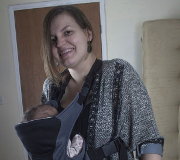
New parents James and Sarah are thrilled at the birth of their daughter Amira and are are a disabled couple out to prove that parenting is possible.
Challenging Medical and Social Opinions
Childhood sweethearts James and Sarah, who’ve been together for more than ten years, will embark on an exciting new chapter in their lives as they celebrate the birth of their baby girl. When the couple found out Sarah was pregnant they were delighted – then surprised and shocked to be told by medical professionals that they didn’t think the couple were able to look after a child.
James, 24, is a wheelchair user and Sarah, 25, walks with the aid of crutches. Although both suffer from cerebral palsy, the condition doesn’t impact on their life expectancy. Cerebral palsy sufferers don’t become further affected by the condition as they age.
“They admitted having doubts about how we were going to look after the baby,” said James
He added: “I thought to myself, “Shouldn’t we have the same possibilities as anyone else and not be judged by what we look like? We knew that we could give the baby as much love, care and attention as any other parent”
We knew that we could give the baby as much love, care and attention as any other parent
Healthy and Happy Baby
Despite her disability Sarah gave birth to Baby Amira naturally and commented: “I was shocked that I didn’t need a caesarean or pain relief.”
She and James are already thinking to the future, when Amira is older and how they’ll work together to manage the day to day tasks of bringing up their daughter.
“While I don’t like the idea of reins we could use those. Because James is in an electric wheelchair, he’s less likely to be pulled over by her.
Family Support
James said: “My mother taught me that the disability itself was only at face value and what matters is what’s in a person’s brain.
“I have two older brothers and I’ve never really been treated any differently to them. I think a lot of disabled people don’t have confidence within themselves.”
“Just by being here, Amira has enabled other disabled people to see there is hope I want them to know they can have children but also that they can live the life they want.”


