
 France
 Germany
 Italy
Italy Spain
Spain Ireland
 Czechia

I’ve faced many challenges since I became disabled in my teens, but one of the longest battles I’ve had has been trying to find accessible housing. At the age of 27, I’ve finally moved into an adapted bungalow and started this new chapter of my life.
Home Adaptations
We had adaptations put into my parents’ house throughout the years but the property could never be fully accessible. When we found out my condition was life-long and I started having more complications, that was when I made the decision I’d like (and needed) a place of my own. I wanted to be able to move around safely (stairs were a huge issue at my parents) but also not miss out on life anymore because of my living environment. I couldn’t read my nephew a story when I wanted to or invite my friends over because moving around my home was so difficult. It was time for a change.
Accessible Housing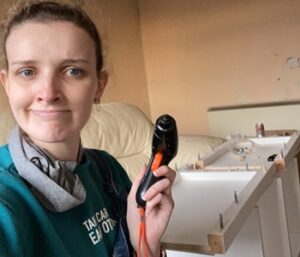

I was on a waiting list for social housing for many years. It affected my mental health as I was denied property after property because of my disability. I campaigned, wrote letters, visited sites and fought my way through the system. I eventually was selected for a bungalow that didn’t tick all the boxes, but luckily, I got my foot through the door and got it. It hasn’t been all plain sailing but I can’t put into words how much I love it here; my home.
Statistics
- 8% of all households in England (1.9 million) had at least one person with a long-standing physical or mental health condition and said that they required adaptations to their home.
- 19% of those households (374,000) that required adaptations considered their accommodation unsuitable for their needs.
- 33% of households that require adaptations found their accommodation unsuitable and want to move.
(Statistics from the latest report: The English Housing Survey 2019-2020)
Oh, To Be young!
There are 10% more younger disabled people than older disabled people reporting that their property isn’t suitable for their needs, yet there simply aren’t housing options out there to cater for this. A lot of accessible housing is ringfenced for the over 65. Social housing often becomes the only option, as building a deposit or private renting has even more red tape for disabled people. Argh! It’s incredibly frustrating.
Tips on Applying for Social Housing
- Make sure you are in the right band and have the exact things you need for a property including what you could, if needed, compromise on.
- Regularly contact your local social housing team and ask for updates on all properties which could be suitable.
- If you see a property locally which may be getting built, contact their company and stay up to date with them.
- If the property is ringfenced for over 65’s, read their T&Cs to see if it’s legally allowed or if they can drop it for extenuating circumstances.
- Keep an eye on relevant websites such as habinteg.org.uk (England only) or the UK-wide, www.homefinderuk.org.


