
 France
 Germany
 Italy
Italy Spain
Spain Ireland
 Czechia
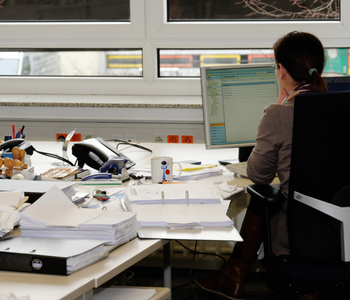
Government statistics show there’s a substantial difference in the rates of disabled people in employment, education and further education, compared to non-disabled counterparts. These statistics show 19.2% of disabled people aged 16+ don’t hold any formal qualifications – compared to just 6.5% of non-disabled working age people.
Physical Barriers
When it comes to finding jobs, disabled people must consider additional conditions such as accessibility and ease of commuting. Although legislation requires equal opportunities and accessibility – this isn’t always the case. With older buildings and small, confined office spaces, people using wheelchairs may struggle to simply fit inside the company’s premises.
Commuting can make the options for jobs extremely limited due to inaccessible public transport. Mr Drouet, a wheelchair user from east London says that his disability means his journey takes an extra 80 minutes than it would if he didn’t use a wheelchair. He argues:
“Non-disabled people can get London Overground [trains] to Highbury and Islington railway station and then take the Victoria Line, but that’s not currently accessible, so my route gets incredibly complicated.”
Opportunities vs Attitudes
Disabled people on average need to apply for 60% more jobs before finding work, than non-disabled people (according to a survey carried out by Opinium). University graduate, Lauren Pitt, explains how she struggled to get interviews and when she did, interviewers were more concerned about her disability rather than her skills. She recalls some interviewers asking questions like, ‘how could she do this job?’ and going quiet when she revealed that she is registered blind.
Mental Impact
Once in a job, those who struggle with disabilities often feel like they need to over-compensate and work harder, as a way of ‘proving’ they are worthy. According to Opinium, over half worry about losing their job. Jenny, who worked in the PR sector, quit her job the day before an occupational health assessment as she was scared of being fired. She said:
“One line in the letter I received said that a possible outcome could be dismissal. I resigned the day before the assessment. I was terrified of being fired.”
“One line in the letter I received [from the assessor] said that a possible outcome could be dismissal. I resigned the day before the assessment. I was terrified of being fired.”
Scope for Change
Disability charity, Scope, is campaigning for better work opportunities for disabled people. They’re campaigning to reduce the disability employment gap and want the government to take responsibility and actively monitor and reduce this. One of their aims is also to gain further investment for Access to Work – which assists companies in hiring and managing disabled employees. For more information and progress updates on campaigns, check out their website


