
 France
 Germany
 Italy
Italy Spain
Spain Ireland
 Czechia

Increasing the momentum towards women’s equality is at the core of this years’ International Women’s Day theme – Accelerate Action.
As Great Britain Wheelchair Rugby (GBWR) looks to #AccelerateAction by elevating women and girl’s participation and achievement in sport, we caught up with two 16-year-old GBWR players, Hayley Cassin and Millie Partridge, to learn about their experience as young women in the sport and why more women should play wheelchair rugby.
Meet Hayley

Hayley found disability sport at the age of seven and is now studying a level three diploma at Rotherham United Football College.
Having recently won bronze with Great Britain Women’s Wheelchair Rugby Team at the Women’s Cup in Paris, Hayley tells us why she loves the sport:
“I play wheelchair rugby because it’s inspiring and very inclusive. It’s also fast moving with a few crashes in between! I love being part of a team and I’ve made some great friendships throughout.”
Meet Millie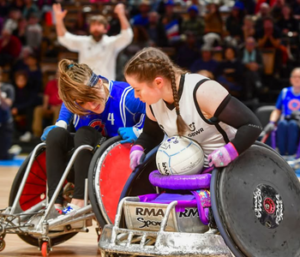
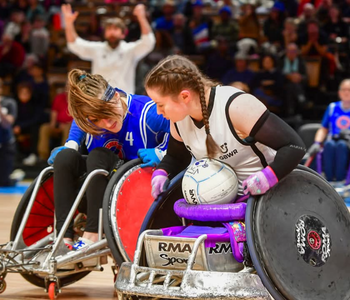
Currently studying for her GCSEs, Millie tells us that she had tried a few sports in the past but found nothing quite stuck. However, after attending a wheelchair rugby try out session at Stoke Mandeville, Millie finally found the sport for her.
Talking about why wheelchair rugby appeals to her, Millie says,
“I enjoy the adrenaline that it brings, how fast and hard hitting it is and the community of the sport.”
Women in Wheelchair Rugby
Wheelchair rugby is one of only a few sports where men and women play on the same team. Although more women are taking up the game, it’s predominately played by men. Reflecting on their experience of being young women in a predominantly male sport, the pair emphasised the inclusive and welcoming environment of GBWR.
“I think that there are very few women in the sport, but I don’t think it’s impacted my experience personally. There is definitely a community inside a community for women in the sport,” Millie affirms.
Sharing her experience, Hayley says, “Being a female in my experience has not held me back at all. I think wheelchair rugby has been really inclusive. I’ve been totally involved; it’s not been a set back at all.”
Tackling Stereotypes
As well as having women and men play alongside each other, wheelchair rugby is also one of the only full-contact disability sports out there. Discussing the stereotype that disabled people and women more generally can’t play contact sports, Hayley says:
“Disabled people are more than capable of playing contact sports. I always say that sport has been my saving grace. Without sport, I wouldn’t be where I am today.”
In agreeance, Millie points out that both she and Hayley are proof this stereotype isn’t true:
“Hayley and I are in contact sport, so, that proves that wrong!”
She continues, “I think tackling the stereotype that women can’t play contact sports would mean accurate representation in the sport, like more role models to encourage the possibilities for young women.”
What is GBWR Doing to Accelerate Action?
The young sporting stars highlight an array of steps GBWR is taking to encourage more female participation and elevate women’s achievements, from female only training sessions, to adverts and campaigns targeted at women such as This Girl Can and I Can Play.
“They’re also going to be holding the first women’s cup in Nottingham this year for domestic teams,” Millie announces.
“I feel like that’s going to have a big impact on increasing women’s participation and hopefully we’ll see that grow throughout,” Hayley adds.
Girls, Give it a Go!
To disabled women and girls reading this blog who are looking for a new sport but are feeling a bit apprehensive about wheelchair rugby, Hayley shares some simple, valuable advice:
“Get out there and have a go. I believe if I can do it, you can too. So, try it.”
To get started, find your local club here, or learn more about GBWR here.


